What It Costs to Open an Indoor Sand Playground
The cost to open an indoor playground is $150,000 to $300,000 for a lean independent location. We know because we wrote those checks in 2025. Here is where every dollar went, including the sand line nobody warns you about, so your money can go further than ours did.
Key Takeaways
- All-in to open: $150,000 to $300,000, plus a funding runway on top. Your buildout drives the range.
- Sand: $17,000 to $25,000 delivered and installed. The line that surprises everyone.
- Fixed monthly cost: $9,000 to $11,000 before you pay yourself. Breakeven sits near $11,000 to $14,000 in monthly revenue.
- Our first year: $98,000 earned, $168,000 spent. Every number below is real.
- June is quiet. Ours was $5,000. December was our best at $14,000. You can plan around this.
- We grew revenue 37% in a year on $300 of advertising.
- Give yourself about two years of runway. It is the kindest thing you can do for future you.
How much does it cost to open an indoor playground?
Budget $150,000 to $300,000 all-in for a lean independent location, with a funding runway on top of that.
Search this question and you will mostly find pages written by companies that sell playground equipment. Their ranges are wide and cheerful and never attached to a real profit-and-loss statement. Ours is, and we would rather hand you a true number than a comfortable one — a true number is something you can actually plan against.
The spread comes down to your space. A second-generation unit that already has restrooms, decent power, and an open floor might need $40,000 of work. A raw shell can take $200,000 and six months. So the most valuable habit on this entire page is this: get contractor bids before you sign the lease. The lease is a ten-year decision usually made on a two-week timeline, and the buildout estimate is the only thing that tells you whether the rent is truly affordable.
The lines people underestimate:
- Leasehold improvements. Nearly always the biggest and most variable number.
- Sand, $17,000 to $25,000. Its own section below, because it deserves one.
- Insurance, often one annual lump. Ours was about $12,000 up front in January 2025. Budget the lump so it does not catch you sideways.
- Professional fees. An architect if your buildout needs one, and an attorney for the lease and your waiver. Both are inexpensive compared with what they prevent.
- Your runway. The one line entirely within your control, and the one most worth protecting.
What does the sand cost, and why is it so specific?
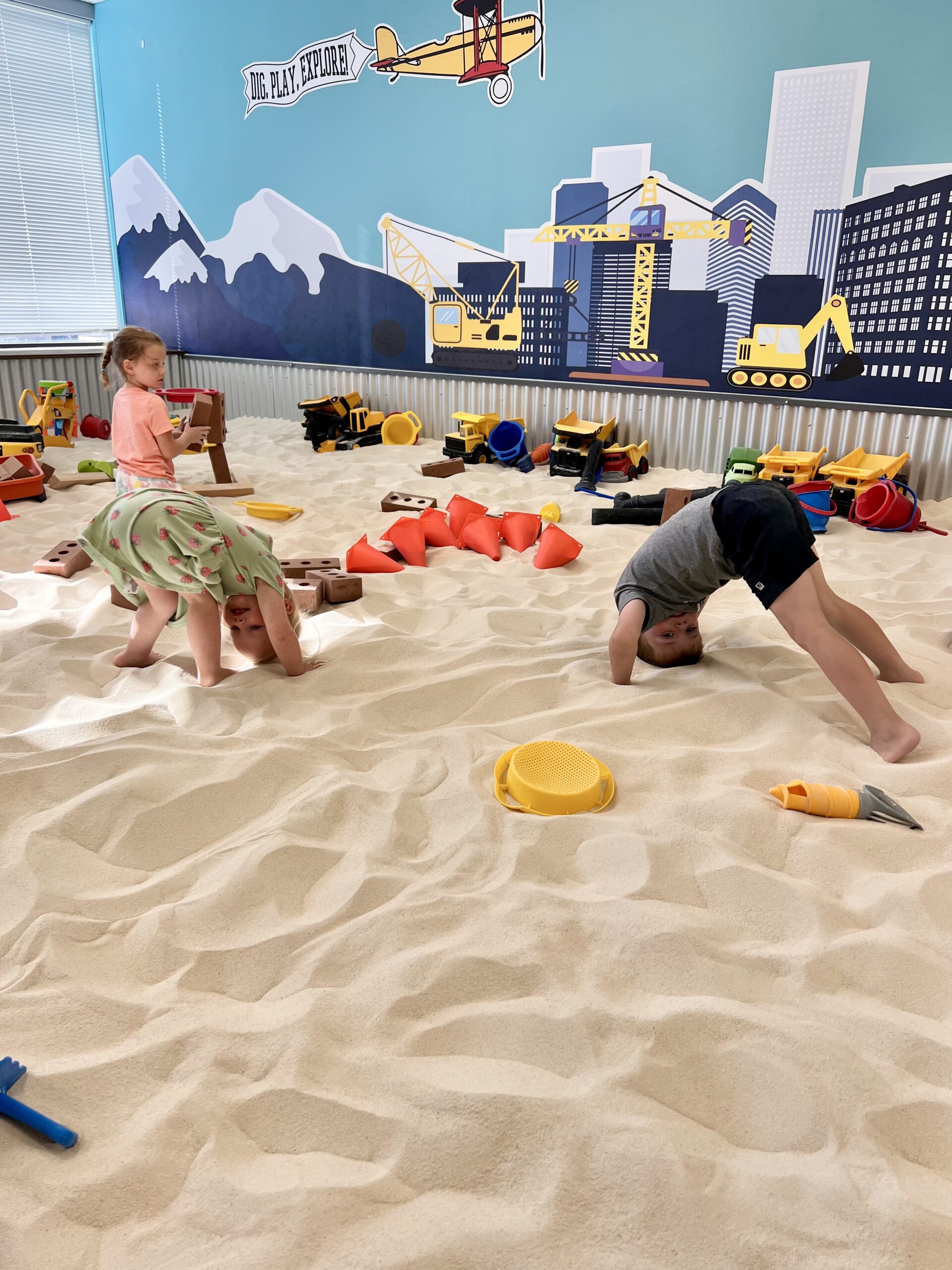
Budget $17,000 to $25,000 for silica-free play sand including delivery and installation. That number surprises nearly everyone, and it is the first line people try to trim.
Please do not trim it. The sand is the product. Everything a family feels about your business, they feel through their hands in the first ninety seconds. And replacing a whole floor of the wrong sand costs far more than buying the right sand once.
This is also where a sand place stops being a general play space. There is decent advice online about opening play cafes and family entertainment centers, but almost none of it covers sand, because very few people advising have run a room floored in it. The questions that will actually occupy you are these:
- Which grade, and how many tons? It depends on your floor area and your chosen depth. Sand is priced by volume, so an extra few inches across a large room is a real number.
- Who delivers and installs it near you? A genuine logistics problem whose answer differs by state.
- How do you clean it? Every night, including weekends and holidays. It is a real protocol and it is the entire basis of a parent trusting you.
- How do you control dust and keep sand inside? Mostly learned by getting it wrong first.
- What does depth do to floor loading, and what does a big open sand room cost to heat and cool? Structural and climate consequences a soft-play room simply does not have.
- How often does it need topping up? Plan for it rather than being surprised by it.
Parents will ask you about silica on your first Saturday. Have a real answer ready — ours is in our guide to playground sand safety, types, and risks.
What will it cost me every month?
This is the number that runs your life. Ours sits between $9,000 and $11,000 a month before we pay ourselves anything.
| Expense | Roughly per month |
|---|---|
| Rent | $3,400 |
| Loan interest on the buildout | $2,200 |
| Payroll and payroll taxes | $2,000 – $3,000 |
| Supplies and materials | $500 |
| Software and subscriptions | $400 |
| Utilities | $300 – $500 |
| Card processing fees | $300 – $450 |
| Insurance (annualized) | $300 |
Two things we learned by paying for them.
Debt is the most expensive thing on the list after rent. We financed our buildout and the interest became our largest fixed line at about $2,200 a month. A simpler buildout, more cash, or a landlord who contributes a tenant improvement allowance all beat a beautiful room you have to carry through a quiet June. If you can lower this one line, do.
Card processing takes about 3% of nearly every dollar. In a business built on small tickets, almost every transaction is a card. Model it as a real line rather than a rounding error.
What did your first year actually look like?
We opened on January 18, 2025. Calendar year 2025 finished like this:
- Revenue: $98,000
- Expenses: $168,000
- Operating result: $70,000 more spent than earned
A separate non-cash depreciation charge of $64,000 was booked in December, writing down the buildout and equipment on the books. That pushes the accounting net income line to about negative $134,000. It is a bookkeeping entry rather than cash leaving the account, and it is worth understanding before a lender asks you to explain it.
We would do it again, and we are showing you the whole thing because the shape matters more than the total:
| Month | Revenue | Month | Revenue |
|---|---|---|---|
| Jan 2025 | $7,000 | Jul 2025 | $8,000 |
| Feb 2025 | $9,000 | Aug 2025 | $10,000 |
| Mar 2025 | $10,000 | Sep 2025 | $6,000 |
| Apr 2025 | $7,000 | Oct 2025 | $6,000 |
| May 2025 | $7,000 | Nov 2025 | $10,000 |
| Jun 2025 | $5,000 | Dec 2025 | $14,000 |
Set that against a $9,000 to $11,000 monthly cost and you can see the shape of a first year. Two months cleared it. That is not a concept failing — that is what a ramp looks like while a town learns you exist, and it is exactly why your runway matters more than your finishes.
Let us look at your numbers with you
The most useful thing we could have had in month one was someone who had already done it telling us which of our assumptions were wrong. That is the job we do now.
- Feasibility review, $500 – a 2-hour working session on your town and your space, plus a written go or no-go memo you can hand to a bank or a spouse.
- Launch package, $5,000 – six working sessions across 90 days: site selection, your cash forecast, sand specification and supplier introductions, floor plan, opening documents, booking setup, and your first eight weeks of marketing.
- Entirely yours – your name, your brand, no royalty, nothing owed once we are finished.
Which months are slow, and how do I plan for them?
Indoor play runs opposite to what most people expect, and knowing that in advance is worth real money.
Our quietest month was June 2025 at $5,000. Our best was December at $14,000, three times as much. In summer, families are outside, at the pool, at camp, or traveling. In winter you are the warmest, calmest room in town. November through March carries your year.
We did not see our first June coming. You will, so here is how to use that:
- Never annualize a good winter month. Take twelve months or take none.
- Build your summer plan in February. Camps, punch cards, season passes, and partnerships all need lead time you will not have in June.
- Open in autumn if you can choose. You get your strongest season first, which builds habit and cash before the quiet stretch.
Where does the money come from?
This is the question people are most embarrassed to ask, and it has ordinary answers.
Most independent openings we know of are funded by some mix of savings, a home equity line, an SBA-backed loan, help from family, and a landlord who contributes toward the buildout. Ours involved financing the buildout, which is why loan interest became our biggest fixed cost after rent.
The lesson we would pass on: every dollar you can fund without debt lowers your monthly nut for years. A tenant improvement allowance negotiated into the lease is genuinely free money and it is worth asking for. So is a simpler first version of the room. You can always add later, and adding later is much easier when your fixed costs are low. The SBA loan programs are the usual starting point for the borrowed portion.
How we grew 37% on almost no advertising
Here is the part of our numbers we are genuinely proud of. Comparing January through July 2026 against the same months of 2025, revenue grew 37%, from $52,000 to $71,000.
We did it while cutting advertising to almost nothing: $300 across seven months, against $8,700 the year before. The growth came from local search, partnerships with nearby preschools and studios, showing up in the neighborhood, and families telling other families.
If you take one operational lesson from this page, take that one. For a neighborhood venue, paid advertising is the least efficient thing you can buy in year one. Your Google Business Profile, your reviews, your local relationships, and the way the room feels will outwork any budget you could realistically fund.
Frequently Asked Questions
How much does it cost to open an indoor playground?
Budget $150,000 to $300,000 all-in for a lean independent location, plus a funding runway on top. Leasehold improvements drive most of the range, so get contractor bids before signing a lease. For a sand playground, sand alone runs $17,000 to $25,000 delivered and installed.
What does sand cost for an indoor sand playground?
Plan on $17,000 to $25,000 for silica-free play sand including delivery and installation. The exact figure depends on your floor area and chosen depth, since sand is priced by volume. Get your sand quote before finalizing the floor plan, because adjusting a plan is far cheaper than reordering.
What are the monthly running costs of an indoor playground?
Ours run $9,000 to $11,000 a month before owner pay. Rent is about $3,400, loan interest on the buildout about $2,200, and payroll $2,000 to $3,000. Software, supplies, utilities, insurance, and card fees fill the rest. Card processing alone takes roughly 3% of revenue.
How long does an indoor playground take to break even?
Most take about two years to find their feet, and funding for longer is wise. Monthly breakeven for a lean location sits near $11,000 to $14,000 in revenue against a $9,000 to $11,000 fixed monthly cost. Your runway matters more than your finishes.
Which months are slowest for an indoor playground?
Summer. Our quietest month was June 2025 at $5,000, against a December best of $14,000. Families are outside, at camp, or traveling from June through August, while November through March carries the year. Build your summer programming in February, not in June.
How much should I budget for advertising?
Less than you would think. We grew revenue 37% year over year while spending $300 on advertising across seven months, down from $8,700 the year before. Local search, your Google Business Profile, community partnerships, and word of mouth outperform paid media for a neighborhood venue.
Plan against real numbers, then go build it
The cost to open an indoor playground is knowable, and so is your monthly nut. The number nobody publishes is the third one: how long you carry those costs before revenue catches up. Ours has taken longer than we planned, and we would much rather you plan for that than be surprised by it.
You have questions and we have answers, so ask us anything. We are at 16677 E. Smoky Hill Rd., Aurora, CO 80015.