The Ultimate Guide to Playground Sand Safety: Types, Risks, and Recommendations
What is the Safest Sand for Your Child’s Playground or Sandbox?
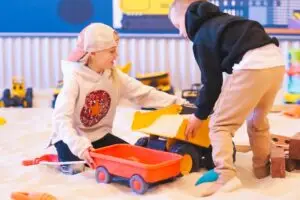
As a parent, you want the peace of mind that comes from knowing your child’s play environment is safe. When it comes to playgrounds and sandboxes, the type of sand you use directly impacts your child’s health and the longevity of your play space.
At The Sand Place in Aurora, CO, safety is our #1 priority—it’s why we’ve invested in certified, silica-free sand for our entire indoor facility. In this guide, we break down the five most common types of playground sand, explain the critical safety risks, and recommend the best choice for safe, healthy play.
1. Top 5 Types of Sand Used in Playgrounds
Not all sand is created equal. Each type comes with a distinct profile in terms of safety, cost, and playability.
A. Washed/Play Sand (The Budget Option)
What it is: Typically quartz or silica-based sand that has been washed and screened to remove debris and larger particles. This is the most common option found at hardware stores.
Pros: Very inexpensive, widely available.
Cons: High risk of crystalline silica dust (see Section 2), grains are angular and can feel abrasive, prone to compaction and hardening over time.
B. Masonry Sand (The Construction-Grade Option)
What it is: A very fine, smooth sand used primarily for mixing mortar.
Pros: Very soft texture.
Cons: Extreme risk of fine silica dust, makes a mess, and should never be used for children’s play due to the high inhalation hazard.
C. Beach Sand (The Natural Option)
What it is: Sand sourced from coastal areas.
Pros: Natural feel, familiar texture.
Cons: Contains fine shell fragments that can be sharp, often retains high salt content (which dries out skin), and is not designed or certified for play safety.
D. Crushed Granite Sand (Decomposed Granite / DG)
What it is: Ground-down granite particles.
Pros: Excellent for drainage, often used as a stabilizer in playgrounds.
Cons: Grains are angular and sharp, creating a rougher surface that can cause cuts and scrapes. Not ideal for sensory play.
E. Oolitic Aragonite Sand (The Premium, Safe Option)
What it is: A natural, renewable sand primarily composed of calcium carbonate, sourced from the ocean floor.
Pros: 100% Silica-Free, non-toxic, perfectly round grains for supreme softness, low-dust, and superior for building and molding.
Cons: Higher initial cost than silica sand.
(This is the type of sand we use exclusively at The Sand Place!)
2. Critical Safety Risks in Playground Sand
For parents, understanding the hidden dangers of certain sand types is the most important step in protecting a child’s health.
Danger #1: Crystalline Silica Dust Inhalation
The most significant safety concern with cheap, quartz-based play sands is respirable crystalline silica.
When children kick, dig, or dump dry silica sand, microscopic dust particles become airborne.
Repeated inhalation of these particles can lead to silicosis and is classified as a human carcinogen.
Actionable Advice: If you see a cloud of dust when your child is playing, they are inhaling fine particles.
Danger #2: Parasites and Bacteria
Regardless of the sand type, outdoor sandboxes are magnets for contamination.
Cats, dogs, and other animals use uncovered sandboxes as litter boxes.
Uncovered sand can quickly become contaminated with E. coli, Toxoplasmosis, and other harmful bacteria.
Actionable Advice: Always keep your sandbox covered when not in use. Replace sand every 1–2 years, or more frequently if contamination is suspected.
Danger #3: Angular Grain Shape
Sand with angular or sharp edges (like crushed granite or unwashed silica) can cause skin irritation, especially when rubbed on the hands or face. Round grains are much gentler and are best for fine motor skill development.
3. Our Expert Recommendation: Oolitic Aragonite Sand
After extensive research into safety, playability, and environmental impact, our choice was clear: Oolitic Aragonite Sand (such as Baha Play Sand).
| Safety Factor | Oolitic Aragonite Sand | Why it Matters for Your Child |
| Respiratory Safety | 100% Silica-Free | Eliminates the inhalation risk of crystalline silica dust. |
| Physical Safety | Rounded Grains | Incredibly soft; reduces irritation and abrasion during play. |
| Play Environment | Non-Compacting | Stays soft and fluffy, even when dry, for a consistently fun texture. |
The Sand Place Commitment to Safety
Our business is built on providing the safest, cleanest indoor play experience possible.
Our entire facility in Aurora, CO, uses this premium, non-toxic sand.
The environment is climate-controlled and consistently monitored, ensuring no external contaminants (like animal waste or bacteria) can compromise the play area.
Ready for Safe, Dust-Free Fun?
Choosing the right sand for your child is a critical decision, and you deserve to know you’ve picked the absolute best.
Instead of installing a new sandbox, consider letting your children play in the safest environment available!
Experience the Difference at The Sand Place in Aurora
Skip the safety concerns and the mess. Our climate-controlled sandbox with premium, silica-free Baha Sand is the perfect destination for sensory play and unforgettable parties.